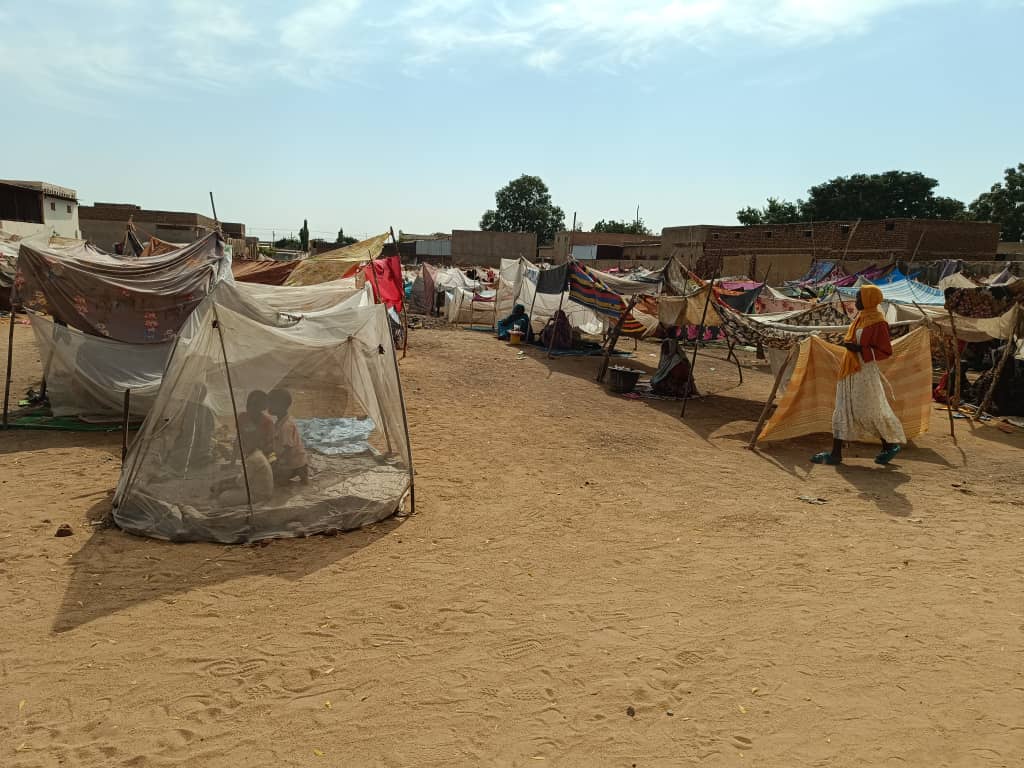
At the centre of the world’s most severe humanitarian crisis, the Estonian Refugee Council began operations in August in hard-to-reach areas of Central and South Darfur. Together with local partners, the organisation is supporting conflict-affected families through cash assistance while establishing safe referral pathways to protection and other essential services.
In the first phase, the programme aims to reach approximately 270 families, or 2,700 people. Families will receive cash assistance for three months, allowing them to decide for themselves whether their most urgent needs are food, shelter, medicines or other essentials. Priority will be given to newly displaced families,families headed by women or children, families with persons with disabilities, and women and girls at risk of sexual and gender-based violence.
In many hard-to-reach areas of Darfur, protection and psychosocial services for survivors of sexual and gender-based violence, as well as previously existing referral pathways between different aid providers, have effectively collapsed due to the war. This means that a person may receive cash assistance from one organisation but be left alone to seek protection from violence, healthcare or psychosocial support, legal assistance, or help with restoring identity documents.
“Sudan is currently facing the world’s most severe humanitarian crisis. Humanitarian assistance is needed by 33.7 million people – more than in any other country – and nearly 12 million people remain displaced. Cash assistance helps families cover their most urgent needs, but support cannot end with a transfer of money. If a person has experienced violence, needs healthcare or psychosocial support, or requires help with documentation, they must be able to access the right services quickly. This is why we are combining cash assistance with safe referrals between services and monitoring whether people receive the support they need. In a crisis where services have largely collapsed, functioning referral pathways can be lifesaving,” said Eero Janson, Director of Estonian Refugee Council.
A central component of the programme is inter-service referrals. If a needs assessment shows that a family requires additional support beyond cash assistance, a local partner’s staff member can, with the person’s informed consent, refer them to available services in the area. ERC’s digital beneficiary management and referral platform enables referrals to be managed securely and followed up, while adhering to principles of confidentiality and safe data management.
The people of Sudan have lived through years of ferocious war, marked by shifting frontlines, severe protection risks, and the widespread involvement of multiple armed actors across the country. The regions of Darfur and Kordofan have been particularly severely affected, with insecurity, administrative restrictions and disrupted supply chains preventing humanitarian assistance from reaching people in need. Nearly 19.5 million people are facing crisis levels of hunger, and several areas are at risk of famine.
The activities are being implemented jointly by Estonian Refugee Council and Norwegian People’s Aid (NPA) together with local partners. In hard-to-reach areas, local organisations are often the only aid providers able to maintain a continuous presence.
The project is supported by the Norwegian Agency for Development Cooperation (Norad).